
Biomedical Engineering
Solving important challenges at the intersection of engineering, medicine, and the life sciences for the benefit of humanity
-
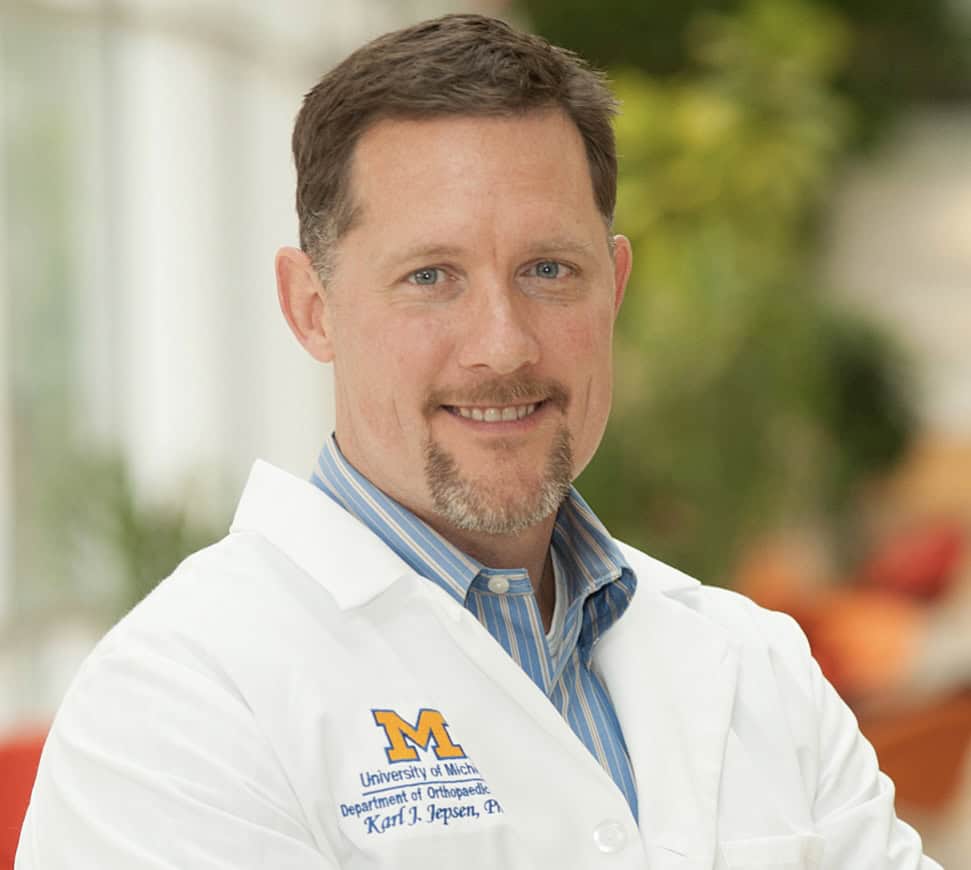
Dr. Karl Jepsen Announced as 2024 Glenn V. Edmonson Lecturer
The 2024 BME Symposium is on Wednesday, May 8, from 9:30 a.m. – 5:15 p.m. at NCRC, Building 18.
-

BME Student Tirth Patel Receives the Barry Goldwater Scholarship
Established in 1986 by the U.S. Congress, the Goldwater Scholarship provides support for highly qualified undergraduates who plan to pursue a PhD and research career in STEM fields. It provides $7,500 for students in support of their junior and/or senior year of study.
-

BME’s Kathryn Ackerman to Compete in Olympic Swim Trials This June
The results of the qualifiers will determine which U.S. athletes will attend the Olympics in Paris later this summer.

DOCTORAL PROGRAMS
Learn about research and funding opportunities
MASTER’S PROGRAMS
Explore BME pathways to earn your MS, MSE, or MEng degree
UNDERGRADUATE ADMISSIONS
The Michigan BME undergraduate degree program provides a strong foundation in the life sciences and engineering.
Core Faculty
Our 47 Core Faculty reflect the breadth and depth of research represented in BME.

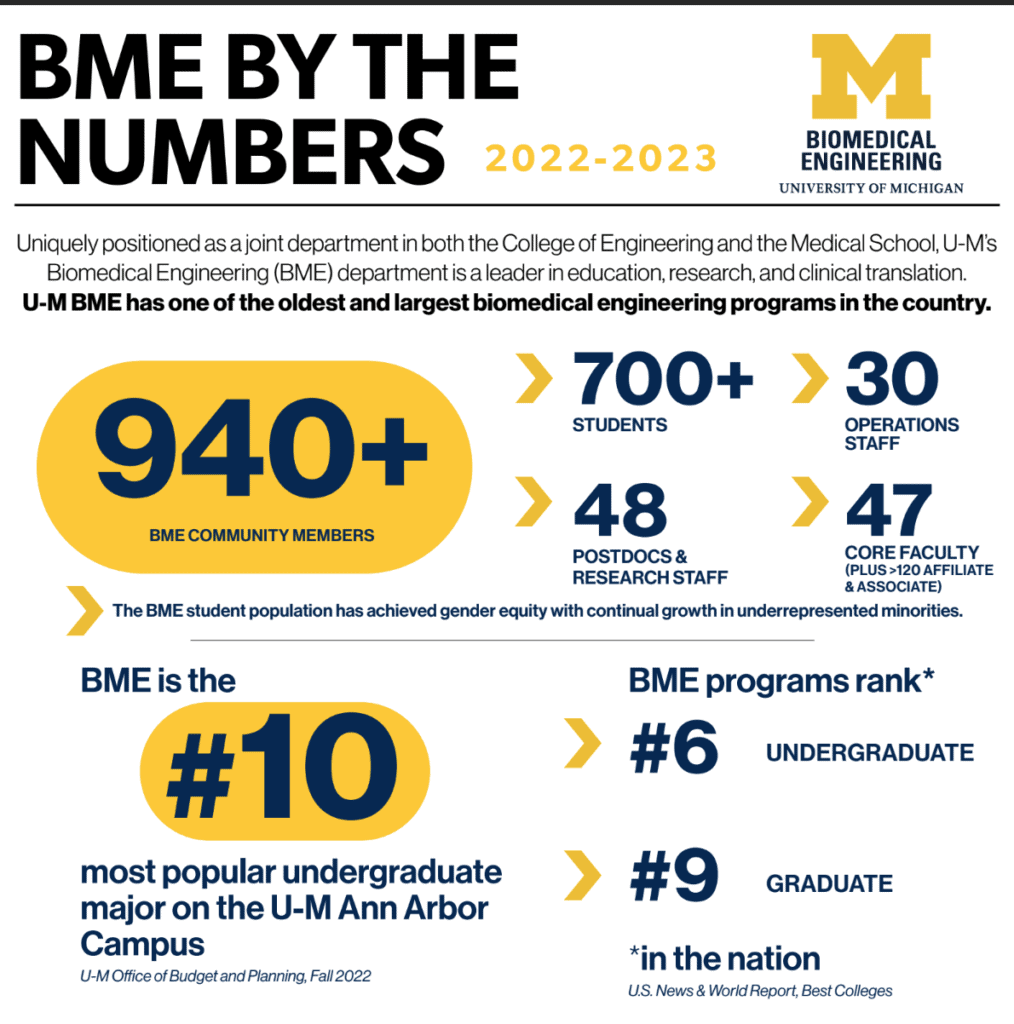
By the Numbers
Michigan BME is one of the oldest and largest biomedical engineering programs in the country.
BME Innovations
Read BME highlights from the past year.
Doctoral Brochure
Learn details about our Ph.D. program.
Master’s Brochure
Read about options for our Master’s programs.
Visit Our Official YouTube Channel
Learn how U-M BME is addressing challenges at the intersection of engineering and medicine. Check out our YouTube channel today!